Structural Drying and Dehumidification in Glendale, CA
Glendale buildings range from homes built in 1939 or earlier to newer apartments, so the drying team builds each plan around the construction and the water category instead of using one setup everywhere.
(888) 578-6508Glendale structural drying help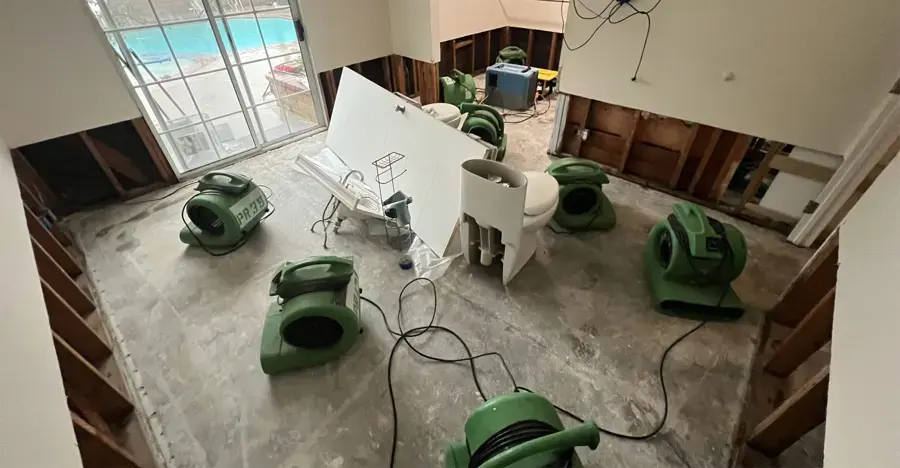
First steps for structural drying and dehumidification in Glendale
- Stop new water.
Make sure the source is shut off or repaired, since a building still taking on water cannot dry.
- Keep doors closed.
Keep the work area closed while equipment runs, so humid air stays near the dehumidifiers.
- Leave it running.
Equipment runs until readings are confirmed, so keep it plugged in and unblocked.
- Keep a note.
Note when equipment started and any change in odor or sound, and share it at each visit.
How structural drying and dehumidification is handled in Glendale
Structural drying is what turns a wet building back into a dry one. In Glendale, where buildings date from 1939 or earlier to recent years, the plan follows each building's construction, because the same equipment layout does not suit every wall, floor and ceiling.
Rapid local response
The response team dispatches 24/7, and active water in Glendale is treated as urgent at any hour, weekends and holidays included.
IICRC S500 drying standard
The drying team maps moisture before equipment goes down and dries the structure, not just the surface, to the IICRC S500 goal.
Claim-ready documentation
The tech who does the walkthrough logs timestamped photos, a moisture map and daily psychrometric readings for the adjuster.
Local water know-how
Local restoration pros plan around hidden leaks under floors, root-blocked sewer laterals, attic AC drains and winter storm runoff.
What does structural drying and dehumidification cost in Glendale, CA?
Structural drying cost in Glendale depends on the drying class, the number of rooms and how long equipment must run. A single room costs the least, while dense materials and several rooms cost the most, and a walkthrough sets the tier.
One room, light moisture
- Air movers and an LGR dehumidifier
- Moisture map and daily readings
- Readings until dry
Several rooms, heavy load
- Wall cavity drying and metering
- Added dehumidifier capacity as needed
- Containment where needed
Dense materials, slow release
- Desiccant or low-grain drying
- Floor mats for hardwood
- Extended daily logs and checks
These are typical Glendale ranges, not a quote. Water category, wet square footage, material class and the hours before drying began move the final number. The water damage cost calculator narrows it for your loss.
The structural drying and dehumidification process, step by step
- 1
Map the moisture
Meters and a thermal camera show which floors, walls and ceilings are wet and how far the moisture spread.
- 2
Set the equipment
Air movers, LGR dehumidifiers and containment are placed from the drying class and the room layout.
- 3
Monitor each visit
Readings are taken at every visit, and equipment is moved or added as the wet areas shrink.
- 4
Confirm dry
Equipment comes out only after each material matches the dry reference, and the logs are handed over.
How drying classes set the plan
The size of the wet area and the type of material decide how much equipment is needed, and the drying class describes how hard it will be for moisture to leave.
- Light loads: one room or part of a room, where carpet or wood absorbed little.
- Heavier loads: water from above, soaking ceilings, walls and insulation across several rooms.
- Specialty loads: water held deep in dense materials such as concrete, hardwood or plaster, which release it slowly.
- Water category sets the cleaning and disposal rules, separate from the drying class.
Equipment and placement
Air movers are set to sweep every wet surface, LGR dehumidifiers pull the water out of the air, and containment keeps the humid air inside the wet area. Equipment is moved as readings change, so the drying follows the moisture instead of staying where it was first placed.
Desiccant units are added for dense materials such as concrete or hardwood, where standard dehumidifiers dry too slowly, as with a slab leak.
Proof that a structure is dry
Each wet material has a moisture reading, and a dry reference reading from the same material in an unaffected part of the building sets the target. The equipment stays until every wet material matches that target, and the logs show it.
Why drying continues after the room feels dry
A room can feel dry to the touch while framing, subfloors and wall bottoms still hold moisture. The logs show a steady fall in readings at each visit, and equipment is removed only when the wettest material has matched the dry reference, which protects floors, trim and new paint from later problems.
Different buildings, different plans
A condominium from the 1980s building boom and a house from 1939 or earlier do not share construction, so the plan is set on site after the walkthrough and after water extraction clears standing water.
Structural Drying and Dehumidification across Glendale and nearby communities
24/7 dispatch and rapid local response for Glendale, CA, day or night.
Structural drying covers houses, condominiums, apartment buildings and shops across Glendale, from Rossmoyne and Adams Hill to Verdugo Woodlands, Whiting Woods, Chevy Chase Canyon, Kenneth Village, Montrose Shopping Park and the blocks around Downtown Glendale.
The same service nearby: structural drying and dehumidification in Granada Hills, Burbank, San Fernando. Every town covered is on the service area page.
Water damage restoration in GlendaleStructural Drying and Dehumidification questions in Glendale, CA
Water still moving in Glendale?
Wet building in Glendale? Describe the rooms and materials, and the drying team will size the equipment and containment.
(888) 578-6508 Glendale structural drying helpWhat does an LGR dehumidifier do?
It pulls moisture out of the air even when the air is already fairly dry, which keeps wet framing, drywall and subfloors releasing water instead of stalling. Placement is adjusted as the air dries out.
Why are the machines left running?
Drying stops only when readings say it should. Pulling equipment early leaves moisture in walls and floors, where it can damage materials and support mold.
How is the dry target chosen?
A reading from the same material in an unaffected part of the building sets the target, and each wet material must reach it before equipment is removed. Readings are logged at each visit.
Do older Glendale buildings dry differently?
Yes. 15,183 housing units date to 1939 or earlier and the median build year is 1967, so wall, floor and ceiling construction varies and the plan is set on site.
When is desiccant drying used?
Desiccant units are added for dense materials such as concrete and hardwood, where standard dehumidifiers dry too slowly. Floor mats draw moisture out of hardwood boards the same way.
Can wet drywall always be saved?
No. Drywall that is firm and reading down can dry in place, while drywall that has softened, stained through or been contaminated is removed.
Glendale drying starts with a plan
The drying team maps the moisture, places air movers and dehumidifiers by class, logs readings every visit and removes equipment only when each material is dry.
(888) 578-6508Call the Glendale drying team