Structural Drying and Dehumidification in Burbank, CA
After the water is out, the structure still holds moisture in framing, subfloors and wall bottoms. The drying team places LGR dehumidifiers and air movers, then logs readings every visit until each material is dry.
(888) 578-6508Burbank structural drying help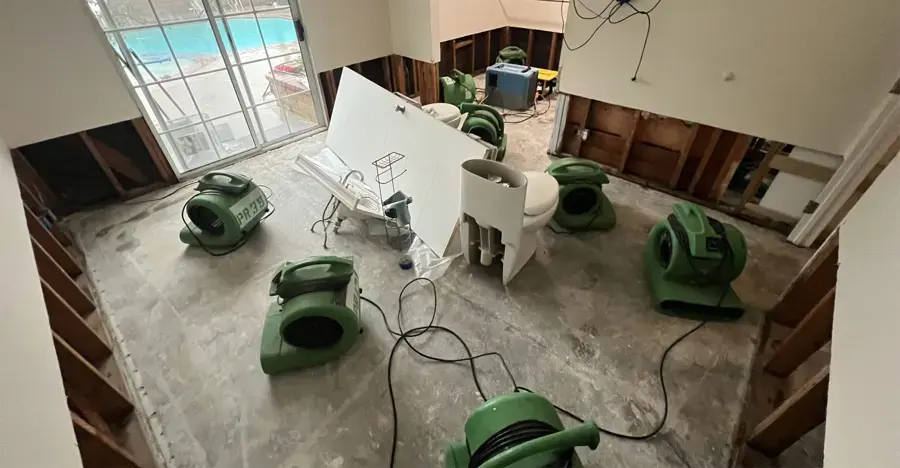
First steps for structural drying and dehumidification in Burbank
- Finish extraction
Standing water comes out first, since dehumidifiers cannot keep up with pooled water.
- Close up the area
Keep doors and windows closed in the wet rooms so the dehumidifiers work on the trapped air.
- Leave equipment running
Do not turn drying equipment off or move it, because placement is set by the moisture map.
- Keep a record
Photograph the setup and keep the daily readings so the adjuster can follow the drying curve.
How structural drying and dehumidification is handled in Burbank
Drying is a measured process, not a fan left running. IICRC S500 groups losses into classes by how much water and how porous the materials are, and the class sets the equipment, the airflow and the dehumidifier capacity.
Rapid local response
The response team dispatches 24/7, and active water in Burbank is treated as urgent at any hour, weekends and holidays included.
IICRC S500 drying standard
The drying team maps moisture before equipment goes down and dries the structure, not just the surface, to the IICRC S500 goal.
Claim-ready documentation
The tech who does the walkthrough logs timestamped photos, a moisture map and daily psychrometric readings for the adjuster.
Local water know-how
Local restoration pros plan around hidden leaks under floors, root-blocked sewer laterals, attic AC drains and winter storm runoff.
What does structural drying and dehumidification cost in Burbank, CA?
Structural drying in Burbank runs from $900 for one room with a Class 1 or 2 loss to $14,000 or more for a Class 4 job with slab, hardwood or plaster. Room count, material type and drying time set the figure.
One room, Class 1 or 2
- LGR unit and air movers set
- Moisture map drawn on day one
- Readings logged each visit
Several rooms, Class 3
- Wall cavities dried with injected air
- Added dehumidifier capacity
- Plastic containment where needed
Class 4 dense materials
- Desiccant units for dense materials
- Mats and panels under hardwood
- Daily logs through final reading
These are typical Burbank ranges, not a quote. Water category, wet square footage, material class and the hours before drying began move the final number. The water damage cost calculator narrows it for your loss.
The structural drying and dehumidification process, step by step
- 1
Map and set goals
Meters and a thermal camera build the moisture map, and dry reference readings set each goal.
- 2
Place the equipment
LGR dehumidifiers, air movers and any mats or desiccant units are positioned to match the class and the room.
- 3
Monitor and adjust
Each visit adds readings, moves equipment toward the wettest spots and opens cavities if they stay high.
- 4
Sign off dry
Equipment comes out only when every material meets its goal, and the full log is handed over.
Equipment matched to the materials
- LGR dehumidifiers remove moisture from the air so wet framing and drywall can release theirs.
- Air movers set low and wide across floors and walls speed evaporation without stirring up debris.
- Floor mats and panels pull water from hardwood that would otherwise cup or buckle.
- Desiccant units handle dense materials such as concrete, where refrigerant dehumidifiers fall short.
Equipment stays on until readings match a dry reference, a measurement taken from similar unaffected material in the same building, so the goal is based on the structure rather than a guess.
Burbank seasons and drying
Burbank's wet season runs from December to March, while July and August each average just 0.01 inches of rain in the NOAA normals. Drying follows the room, not the season: closed rooms, dehumidifiers and daily readings do the work whether the weather outside is damp or dry.
About 70 percent of Burbank's housing units were built before 1980, so older framing, floors and wall finishes are common and each is metered on its own.
From setup to final reading
Day one is setup, right after water extraction: a moisture map, equipment placement and a written drying goal for each material. Each visit after that adds new readings, equipment adjustments and photos, so the log shows the curve from wet to dry.
- Class 1 or 2 losses affect part of a room and materials that release water easily.
- Class 3 losses reach walls, ceilings and insulation, so more airflow and dehumidifier capacity are added.
- Class 4 losses involve slow materials such as hardwood, plaster or concrete, as in slab leak water damage jobs, and need specialty drying.
Burbank lists drywall replacement among its simple Tier 1 permits, so the rebuild step can follow once the final readings are logged.
Why equipment stays
A room that feels dry can still hold moisture in framing and subfloors. Pulling equipment early risks a damp structure, and wet materials can start growing mold within 24 to 48 hours.
Structural Drying and Dehumidification across Burbank and nearby communities
24/7 dispatch and rapid local response for Burbank, CA, day or night.
Structural drying covers every part of Burbank, from the houses of Magnolia Park and the Burbank flatlands to apartment buildings in Downtown Burbank, the Empire Center area and the Verdugo Mountains foothills.
The same service nearby: structural drying and dehumidification in Granada Hills, Glendale, San Fernando. Every town covered is on the service area page.
Water damage restoration in BurbankStructural Drying and Dehumidification questions in Burbank, CA
Water still moving in Burbank?
A room that feels dry can still hold water in the framing, so questions about drying are best answered early.
(888) 578-6508 Ask a Burbank drying proWhat does structural drying actually do?
It removes moisture that extraction cannot reach, the water held in framing, subfloors, drywall and concrete, using dehumidifiers and airflow until readings match a dry reference.
How many days does drying usually take?
Many single-room losses finish in several days, while wall cavities, hardwood and concrete take longer. The daily log shows progress, and equipment stays until every material hits its goal.
Why not just run fans and open windows?
Fans alone move damp air around without removing the moisture, and open windows can bring in more humidity. Closed rooms with dehumidifiers pull water out of the air and the structure on a measured schedule.
Is drying different in a Burbank summer?
Summer is nearly dry, with just 0.01 inches of rain in July and in August, but wet framing and floors still release water slowly. The plan follows the readings, not the weather.
Who decides when the equipment can leave?
The readings do. Each material has a dry goal taken from a reference reading, and the equipment is removed only after every logged reading meets it. The log is handed to the owner and the adjuster.
Can walls be dried without cutting them open?
Often, yes: small holes let warm, dry air flow through the cavity, and drywall that is firm can stay in place. Wet insulation or soft drywall is removed, since it cannot be dried reliably.
Burbank structures need drying to a number
The drying team sets dehumidifiers and air movers, logs readings each visit and leaves only when every material reaches its dry goal.
(888) 578-6508Start Burbank structural drying