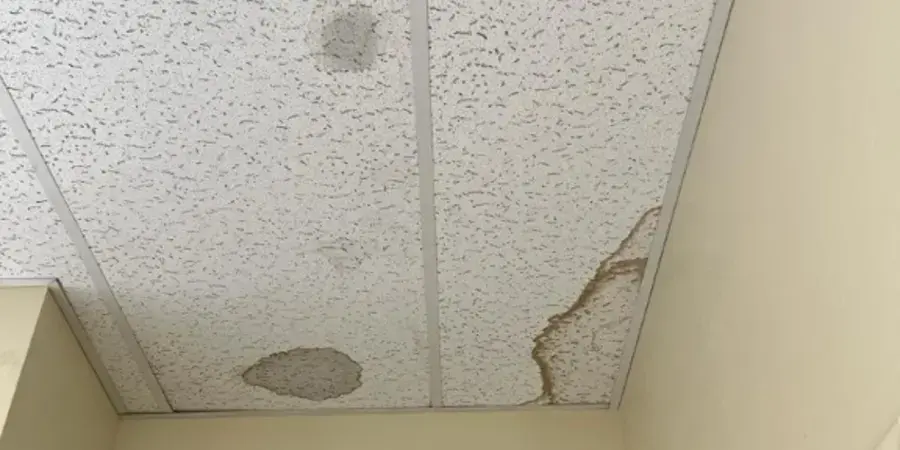
The atmospheric rivers that began on Christmas Eve 2025 damaged Glendale facilities, sidewalks, roads and a debris basin, and water entered the first floor of the Police Department building. For any business owner or building manager, that is the case worth planning for: storm water at ground level and equipment close to the floor.
Key takeaways
- During the December 24 and 25, 2025 atmospheric rivers, water entered the first floor of Glendale's Police Department building and damaged equipment that the city's public works facilities team later repaired.
- Reports of those storms list damage to city facilities, sidewalks, roads, a debris basin, an electric substation and a water main, and they do not report flooded homes.
- Electrical safety and people come first, then extraction, then drying in phases so part of a building can stay open.
- Storm water that comes in from outside is treated as contaminated, so porous materials it touched are removed.
- Moisture maps and daily logs kept by area or unit give managers and insurers a clear record.
What happened in Glendale in December 2025
A series of atmospheric rivers that began on Christmas Eve 2025 damaged several Glendale facilities, sidewalks, roads and a debris basin. Damage at the city's western electric substation caused a power outage for 7,000 residents.
On Christmas Day, a water main broke on Maple Street east of Central Avenue and caused major damage, and Glendale Water and Power crews working in the rain brought it back into operation. Water also entered the first floor of the Police Department building and damaged equipment.
- The City Manager put the damage at $2 to $3 million citywide.
- On December 24, 2025, the Governor proclaimed a state of emergency in Los Angeles County and five other counties.
- On January 2, 2026, the Glendale City Council unanimously ratified a local emergency declaration so the city can apply for state and federal funding.
Why first floors take the water
Ground level is where storm water meets a building. It comes in at doors and thresholds, through floor drains that cannot keep up, and from above when roofs and ceilings leak.
Mechanical rooms, electrical panels, server closets and stock rooms often sit on that same level, which is why a small amount of water can reach expensive equipment.
The Police Department building shows the pattern: water on the first floor, damaged equipment, and repairs afterward by the city's public works facilities team.
Storm water is not clean water
Water that enters a building from outside has crossed streets, parking areas and yards on the way in, and that changes how it is handled.
Carpet and other porous materials that sat in that water are removed rather than dried, and hard surfaces are cleaned and treated before drying starts.
- Mud and silt settle into carpet, tile grout and the bottoms of walls.
- Oil and fuel residue can come in from parking areas and roads.
- Trash and debris travel with the flow and clog drains inside the building.
- A backed up drain can add sewage to the mix.
Day one for a business owner or building manager
The first day is about safety, containment and a clear record.
- Keep people out of wet areas and away from standing water near outlets, panels and equipment.
- Have the electricity shut off to affected areas if that can be done safely, and leave electrical checks to a qualified electrician.
- Close the building's main water valve if a broken pipe could be involved.
- Photograph and video the water, the damage and the equipment before anything is moved.
- Move inventory, files and electronics off the floor and out of the wet zone.
- Call for commercial water damage help so extraction starts while the water is still standing.
- Notify the landlord, the property manager and the insurer, and keep a log of who was told and when.
Extraction first, then phased drying
Two stages carry most of the work, and the order matters.
Extraction
Truck mounted and portable extractors remove standing water. Taking the water out quickly keeps it from wicking into drywall, baseboards and flooring.
Carpet, pad and damaged ceiling tiles that cannot be dried are removed during this stage.
Drying in phases
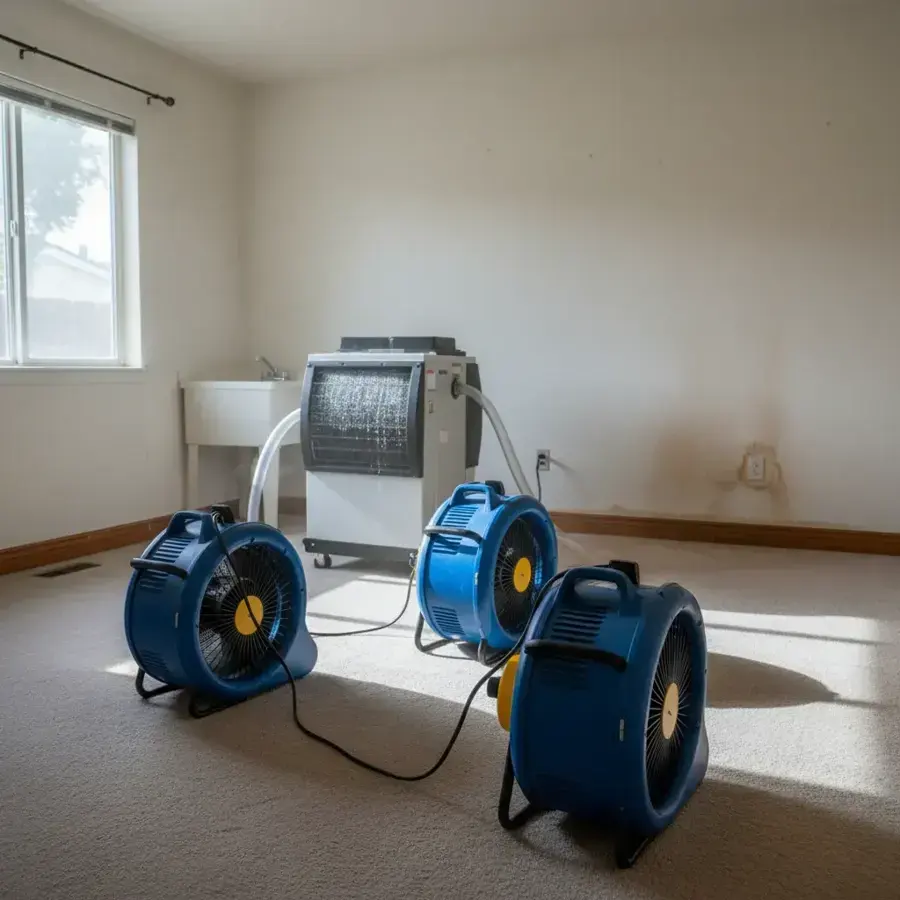
Large or occupied buildings are dried in phases, with containment separating the wet area from the rest of the space. That lets part of a store, office or clinic keep its doors open while the wet area dries.
Structural drying uses air movers, dehumidifiers and daily readings, and the work ends when the readings match a dry reference.
Different Glendale buildings, different plans
The south end of Downtown Glendale has two regional shopping centers, the Americana at Brand and the Glendale Galleria, and the north end holds corporate and tech high rises, while the city counts more than 4,000 newly built apartments across the downtown district.
Brand Boulevard of Cars, on the southern edge of downtown, is a regional concentration of 21 auto dealerships, and the city describes Montrose Shopping Park as its official Old Town, with close to 200 businesses.
A showroom, a shopping center and a high rise lobby each dry differently, and a few factors shape the plan.
- Flooring: carpet, tile, wood and polished concrete each dry or fail differently.
- Layout: open sales floors and tenant suites need different containment.
- Occupancy: apartments above a retail floor change who must be notified.
- Equipment: servers, registers and display fixtures set the order of the work.
Records and the city's emergency declaration
The city's declaration is about the city's own application for state and federal funding. Private owners keep their own records and work with their own insurers.
Moisture maps, daily readings and photos organized by area or unit are what a claim file needs. The restoration team keeps that record as drying proceeds, and owners can start from Glendale water damage restoration when storm water reaches a building.
Questions
Did the December 2025 storms flood Glendale homes?
Reports on the storms list damage to city facilities, sidewalks, roads, a debris basin, an electric substation, a water main and the Police Department building. The sources do not report flooded homes.
What is the difference between storm water and a water main break?
Storm water comes from rain and runoff outside a building and is treated as contaminated. A main break releases water from a pipe that carried drinking water, though the water picks up whatever it crosses on the way.
Who handles a water main break outside a building?
Glendale Water and Power is the city's own water utility, and on Christmas Day 2025 its crews brought the Maple Street main back into operation. Water that has entered a building is a separate cleanup job from the pipe in the street.
Can part of a building stay open during drying?
Often. Containment separates the wet area and drying proceeds in phases, though the answer depends on where the water went and how the building is laid out.
Why is electrical equipment a first concern?
Water and power do not mix, and outlets, panels and equipment at ground level are the likeliest to be reached. A qualified electrician decides what is safe to switch on.
What records help after a storm loss?
Photos and video taken before cleanup, a list of damaged items, moisture readings by area, daily drying logs and notes on who was notified and when.