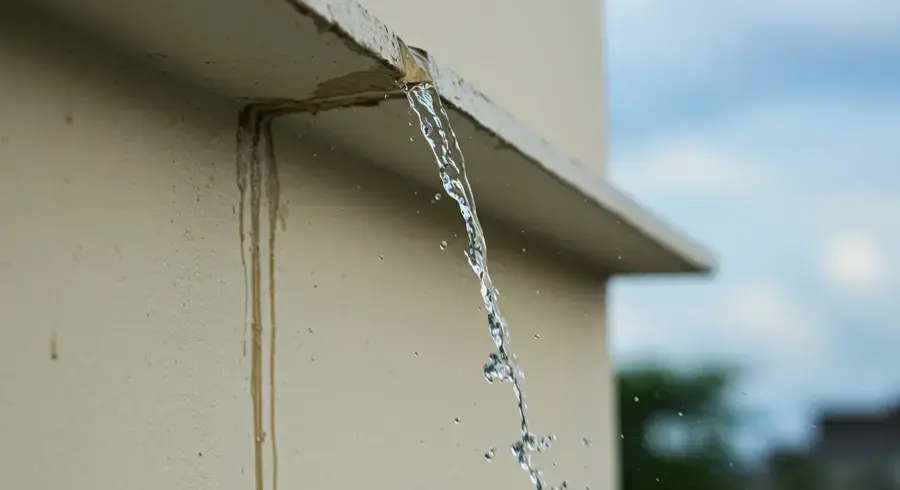
A storm system that began on November 14, 2025 brought 5.57 inches of rain to Simi Valley. A stain that appears during or after a storm like that is usually the visible end of a leak that has already reached the attic.
Key takeaways
- The storm that began November 14, 2025 brought 5.57 inches of rain to Simi Valley, a city that averages 17.9 inches a year, with February the wettest month at 4.8 inches.
- The city notes high winds each year and periods of intense rainfall, so roofs take wind first and heavy rain after.
- During a leak, catch drips, move belongings and stay out from under a bulging ceiling.
- Wet attic insulation and soaked drywall are removed, and framing and ceilings are dried with air movers and dehumidifiers.
- A roofer fixes the roof and the restoration team dries the house, and photos taken before any repair support the claim.
What the November 2025 storm put on Simi Valley roofs
The storm system that began November 14, 2025 brought 5.57 inches of rain to Simi Valley, according to reports cited by the Acorn on November 22, 2025. The National Weather Service issued flood warnings for Ventura County.
That is a large amount of water for one system. The city averages 17.9 inches a year with no snowfall, and February is the wettest month at 4.8 inches.
The city's own notes add three points that matter to roofs.
- High winds occur each year, along with periods of high temperatures and low humidity.
- Periods of intense rainfall call for special drainage precautions.
- Flooding generally occurs in the rainy season from October through April.
How a roof leak shows itself inside
Roof water rarely drips straight down. It runs along rafters and sheathing, soaks insulation and appears wherever the ceiling is lowest or weakest, which is why a ceiling leak can sit far from the opening in the roof.
On the ceiling
- A tan or brown stain, often with a darker ring at the edge.
- Paint that bubbles or peels.
- Drywall that feels soft or sags.
- Drips from a light fixture, which is also an electrical concern.
In the attic
Damp or matted insulation, dark streaks on wood and a musty smell point to a leak above. Anyone who enters an attic should stay on the framing and never step on the ceiling drywall below.
A flashlight look from the hatch can show where water is entering without anyone crossing the attic.
Where roofs usually leak
Most roof leaks start at a joint, an edge or an opening rather than in the middle of a clean roof surface. A roofer finds the exact spot, and the list below shows where the search usually begins.
- Flashing around chimneys, skylights and vent pipes.
- Valleys where two roof planes meet.
- Roof edges, gutters and any place where water pools.
- Loose, cracked or missing roof covering.
- Nail heads and seams that have worked loose.
- Openings for cooling and exhaust equipment.
What to do while the rain is falling
A leak during a storm calls for containment, not a repair. Roof work in the rain is dangerous, so the goal is to limit what the water reaches.
- Put a bucket or tub under the drip and lay towels around it.
- Move furniture, rugs and electronics out of the wet area.
- Stay out from under a ceiling that bulges or sags, because trapped water can come down at once.
- Stay off a wet roof, since a fall is a bigger danger than the leak.
- Photograph the stain, the drips and the room before anything is moved.
- Turn off power to a room where water is dripping from lights or outlets, if the panel can be reached safely.
After the rain: what gets opened and dried
Once the rain stops, the restoration team traces the water from the stain back toward the entry point. Roof leak water damage work follows the water, not just the stain.
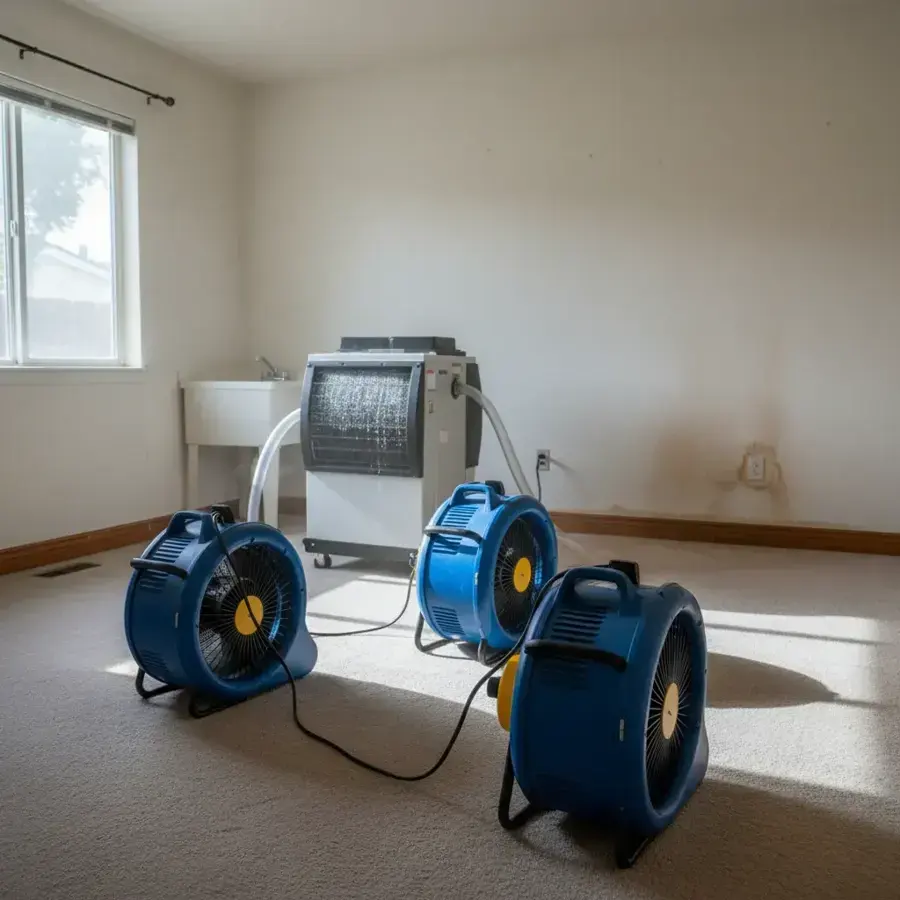
Wet insulation is removed because it holds water against the ceiling, and soaked drywall is cut out. Joists, sheathing and wall tops are dried with air movers and dehumidifiers.
- Moisture readings and thermal imaging map the wet area.
- Soaked insulation and drywall are removed and bagged.
- Framing is dried until readings match a dry reference.
- Walls and flooring below are checked for water that ran down.
Why older Simi Valley homes deserve a roof check
Simi Valley has 45,201 housing units, and 23,496 of them (about 52 percent) were built before 1980. The 1960s are the largest building decade, with 11,324 units, and the median home was built in 1979.
Those homes have been through many seasons of wind and rain. Nothing in the housing numbers says what any roof is made of or how old it is, so a roof's condition is learned by inspecting it after a big storm.
Most of the housing is detached houses, 33,431 of the 45,201 units, so most households have a roof of their own to look after. Another 7,571 units are in multi unit buildings, where one roof covers several households.
- Flashing, vents and roof edges.
- Attic insulation, decking and framing, for dark stains or damp spots.
- Ceilings and walls below, for new stains or soft spots.
- Gutters and downspouts that carry water off the roof.
Roofer first, then drying, then the claim
A roofer repairs or tarps the roof, and the restoration team dries what the water reached. The two jobs run alongside each other, because wet insulation and ceilings should not wait for a roof schedule.
Coverage depends on the policy and the cause, so photos, notes and drying records matter. The restoration team documents readings each day so the file is ready when the insurer asks.
Homeowners can start from Simi Valley water damage restoration after a leak, before a small stain turns into a sagging ceiling.
Questions
How much rain does Simi Valley get in a year?
The city averages 17.9 inches a year with no snowfall, and February is the wettest month at 4.8 inches. The storm that began November 14, 2025 brought 5.57 inches.
When is the rainy season in Simi Valley?
The city says flooding generally occurs in the rainy season from October through April.
Can a roof leak appear days after the storm?
Yes. Water can soak insulation and travel along framing before it reaches a ceiling, so a stain can appear after the rain has stopped.
Does wet attic insulation have to be removed?
Soaked insulation is usually removed, because it holds water against the ceiling and dries slowly. Insulation that is only slightly damp is judged by moisture readings.
Is a bulging ceiling dangerous?
It can be. A bulge can hold a large amount of water and come down without warning, so people and pets stay out from under it until it is drained and removed safely.
What should be photographed after a roof leak?
The stain and the whole ceiling, any drips, wet insulation in the attic and damaged belongings. Photos with the date and time visible show how the damage developed.