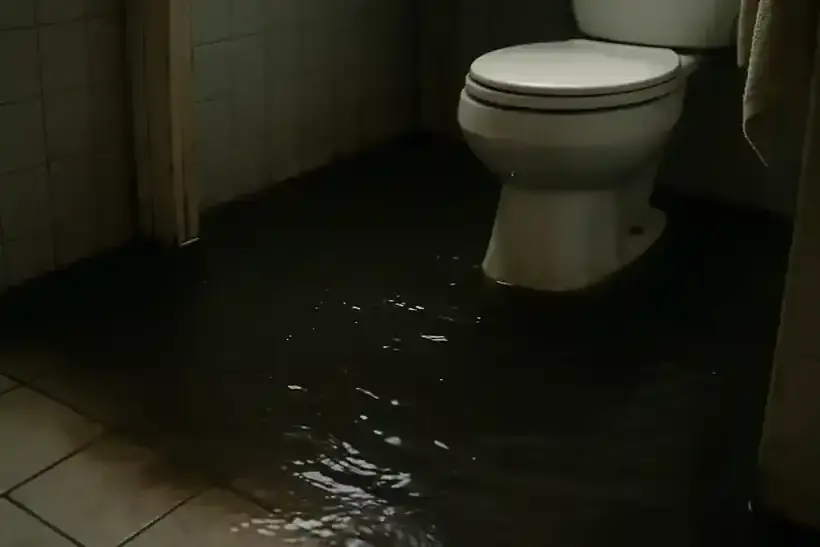
When sewage comes up through a tub, a floor drain or a toilet, the first question is where the clog sits. San Fernando runs its own sewer system, and the city's sewer plan is direct about one point: a problem with the lateral connection is the customer's responsibility.
Key takeaways
- One fixture that backs up usually means a clog in that fixture's own drain, while several low fixtures backing up together point toward the main drain, the lateral or the city sewer.
- The city's sewer plan says a problem with the lateral connection is the customer's responsibility, and Public Works staff take customer calls about the sewer system during and after business hours.
- Sewage is Category 3 water, so carpet, pad, drywall and insulation that touched it are removed rather than dried in place.
- Keeping grease and wipes out of drains prevents many backups, and a camera inspection after a backup shows whether the cause was fixed.
- Photos, the plumber's findings and a list of affected items support a claim, and coverage depends on the policy.
How San Fernando's sewer system is set up
The City of San Fernando owns and maintains its own sewer collection system through its Public Works Department, and the Finance Department operates the water and sewer utilities. The city's 2023 sewer system management plan describes 215,915 linear feet of gravity sewer main, and 97 percent of it is vitrified clay pipe.
The mains
Mains range from 4 to 24 inches wide, and 78 percent are 8 inch pipe. The oldest sections date to the 1920s and the newest to the 1950s, and the system has 834 maintenance holes.
A lateral is the smaller pipe that carries one building's waste out to a main.
The lateral connection
The sewer plan says a problem with the lateral connection is the customer's responsibility. Where a clog sits therefore matters, and a plumber's camera inspection shows where it actually is.
Telling a lateral clog from a main problem
Sewage backs up at the lowest point in a building, usually a floor drain, a tub or a ground floor toilet. Where it appears and how many fixtures are involved gives the first hint, and a plumber with a camera can settle the question.
- One fixture backs up: the clog is often in that fixture's own drain.
- Several low fixtures back up together: the clog is more likely in the main drain, the lateral or the city main.
- A toilet bubbles when a washer drains: air and water are being pushed back by a blockage further along.
- Backups return soon after a drain is cleared: something downstream is still partly blocked.
- Neighbors report the same problem: a city main issue becomes more likely.
First steps when sewage comes up
Every fixture on the same drain can add more water to the problem, so the first step is to stop feeding it. The next steps keep people safe and keep the damage from spreading.
- Stop using sinks, tubs, toilets and washers so no more water flows into the pipe.
- Keep children, pets and anyone with health concerns out of the affected area.
- Avoid walking through the area in shoes that then go into clean rooms.
- Photograph the backup and the affected rooms before anything is moved.
- Call a plumber to find the clog, and report a possible main overflow to Public Works.
- Call for cleanup quickly, because sewage left on floors and walls keeps spreading contamination.
Who to notify and what the city says
Public Works staff take customer calls about the sewer system during and after business hours. A backup that might involve the main belongs in a report to Public Works, even while a plumber works on the home side.
The sewer plan also includes an overflow emergency response plan and a fats, oils and grease control program. Grease is a well known cause of sewer blockages, and that program targets it.
The plumbing question and the cleanup run side by side. A sewage backup cleanup can begin while the plumber looks for the clog.
What a Category 3 cleanup involves
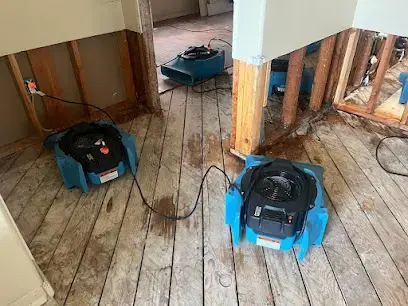
Sewage is Category 3 water, the most contaminated class under the IICRC S500 standard. The crew works in protective gear, with the affected area sealed off from clean rooms.
- Standing sewage is removed first with water extraction equipment.
- Carpet, pad, soaked drywall and insulation that touched the water are removed and bagged.
- Hard surfaces are cleaned and treated with an antimicrobial.
- Containment and air scrubbers keep contamination from drifting into clean rooms.
- The structure is dried with air movers and dehumidifiers until readings match a dry reference.
- Contents are sorted, since hard items can often be cleaned and soft items usually cannot.
Grease, wipes and roots: common causes
Many backups start with something simple. Grease cools and coats the inside of a pipe, wipes do not break down, and roots can find a small gap and grow into it.
A home that has had one backup is likely to have another unless the cause is fixed, so the plumber's findings matter as much as the cleanup. The same causes turn up across the north San Fernando Valley, and the steps match the sewage backup cleanup in Granada Hills.
- Keep grease out of kitchen drains and let it cool in a container instead.
- Flush only toilet paper, and skip wipes even when the package says flushable.
- Ask a plumber to camera the lateral after a backup, so the cause is known.
Records for the claim
Coverage depends on the policy and the cause, so documentation matters. Photos taken before cleanup, the plumber's note on where the clog was and the restoration team's daily logs all go into the file.
A video walkthrough of each affected room, with dates, makes the record easier to follow.
Owners across the city can start from water damage restoration in San Fernando when a backup happens.
Questions
Does the City of San Fernando fix a backup inside a home?
The sewer plan says a problem with the lateral connection is the customer's responsibility, so that part of the repair falls to the owner. Public Works handles the city's mains and takes customer calls about the sewer system, which makes it the right contact when a main overflow is possible.
What is vitrified clay pipe?
It is clay pipe fired until it hardens and glazes. The city's plan says 97 percent of its gravity main is vitrified clay pipe.
Can carpet be saved after a sewage backup?
Carpet and pad that touched sewage are removed. Cleaning cannot make porous material safe again, which is why the cleanup takes it out.
What happens to food and belongings that touched sewage?
Food that touched sewage is thrown away, and soft belongings usually cannot be saved. Hard items such as plastic bins or glazed ceramics can often be cleaned and treated.
What are maintenance holes in the city sewer system?
They are access points along a sewer main that let crews inspect and clear the pipe. The city's plan counts 834 of them.
Should a backup be reported to the city even if the clog is in the lateral?
A report is reasonable whenever the cause is unclear, since Public Works can check whether the main is involved. Once the plumber finds the clog, the repair path follows from where it sits.