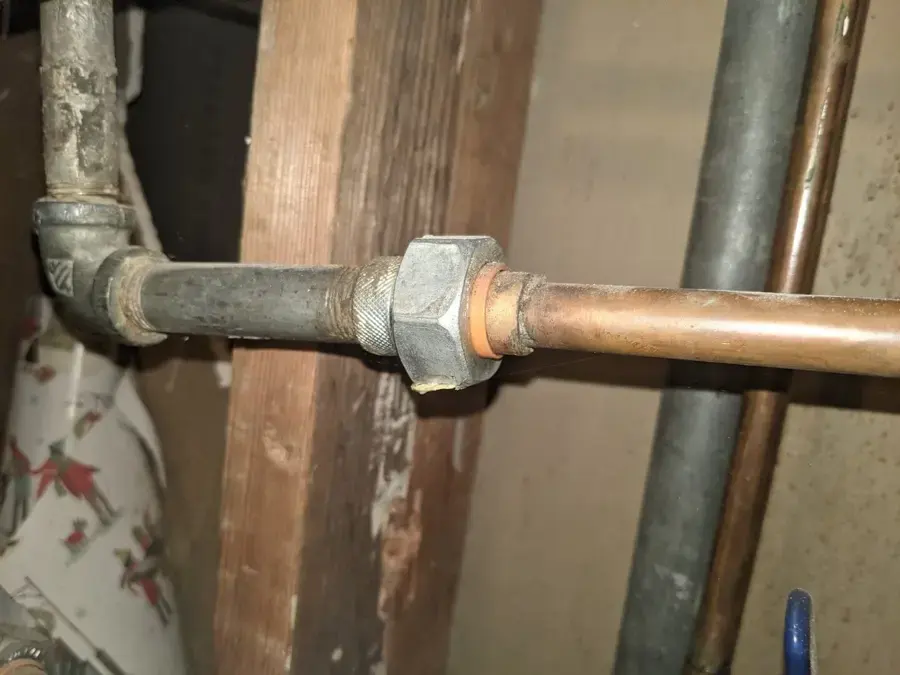
A pipe that has served a house for decades does not always fail with a bang. In Granada Hills, galvanized steel supply pipe in homes built before 1970 is a known failure point, and the first sign may be rust colored water or a stain that keeps growing on a wall.
Key takeaways
- About 62 percent of Granada Hills homes were built from 1950 to 1969, and galvanized steel supply pipe in homes built before 1970 is a known failure point.
- Rust colored water, falling pressure and a damp spot or stain that keeps growing are the usual warning signs.
- The main shutoff valve is the first move, and knowing where it is before a leak saves time.
- A leak inside a wall or ceiling means opening the drywall to extract water and dry the cavity, and wet insulation is removed.
- The plumber decides between a spot repair and replacing a longer run of pipe, and the restoration team's readings show when the wall is dry enough to close.
Why homes built before 1970 in Granada Hills are a pipe story
Granada Hills grew in the years after the war. About 62 percent of its homes were built from 1950 to 1969, with 37.7 percent in the 1950s and 24.8 percent in the 1960s.
Galvanized steel supply pipe in homes built before 1970 is one of the plumbing failure points in Granada Hills. The same era also put copper supply pipe under slabs, which is a different problem covered under slab leak water damage.
Many older homes have had sections replaced over the years, so galvanized steel and copper can sit side by side in the same wall.
How galvanized pipe fails
Galvanized pipe is steel with a zinc coating. Over decades the coating wears away, rust builds up inside, and the opening narrows.
Leaks tend to start at threaded joints and at thin, corroded spots. A small weep inside a wall can run for a long time before anyone sees it.
A pipe that looks sound from the outside can be badly narrowed inside, which is why a plumber's inspection beats a visual guess. The effects build up over time.
- Reduced flow and pressure at showers and faucets.
- Rust colored water after the water has sat in the pipe.
- Weak spots that can open without warning.
Signs a pipe is failing inside a wall or ceiling
Some failures are slow and some are sudden. Either way, the evidence usually reaches the surface of the drywall before it is visible anywhere else.
A single sign can have other causes, so two or more together make a stronger case for a pipe problem.
- Rust colored or brown water when a tap is first opened.
- Pressure that drops at showers and faucets, especially when two are running at once.
- A damp patch, stain or bubbling paint on a wall or ceiling that keeps growing.
- Warm or cool spots on a wall or floor where a hidden pipe runs.
- A water bill or meter reading that rises when nothing explains it.
First steps when a pipe lets go
A failing supply pipe keeps pushing water for as long as the supply stays open, so speed matters more than neatness.
- Close the main shutoff valve, then open a low tap to drain the pipes.
- Turn off power to any room where water is dripping from lights or outlets, if the panel can be reached safely.
- Hold off on the dishwasher and washer until the source is known.
- Move belongings away from the wet area and lift rugs off damp floors.
- Photograph the damage and the source before anything is moved.
- Call a plumber for the pipe, and call for water extraction so the water already inside is removed.
Where the water goes inside a wall
Water from a split pipe follows gravity. It runs down the cavity to the bottom of the wall, soaks the insulation and drywall on the way, and spreads along the subfloor or the edge of the slab.
In a ceiling, the same water collects on the drywall until the weight sags it, and it often finds a light fixture or a vent on the way out.
- Wall cavities hold water against drywall and framing where no one can see it.
- Baseboards and flooring along the wall take up water from below.
- Electrical boxes in the wet path are a safety concern until they are checked.
How the wall or ceiling is opened and dried
Water inside a wall hides behind drywall, insulation and baseboards, so the drying plan starts with finding where it went.
Opening the cavity
Technicians trace the water with moisture readings and thermal imaging, then cut the drywall where the readings say the cavity is wet. Wet insulation is removed, and the cut is kept as small as the readings allow.
The goal is an opening that a drywall patch can close cleanly. Neighboring rooms are checked too, since water can travel through shared framing.
Drying the structure
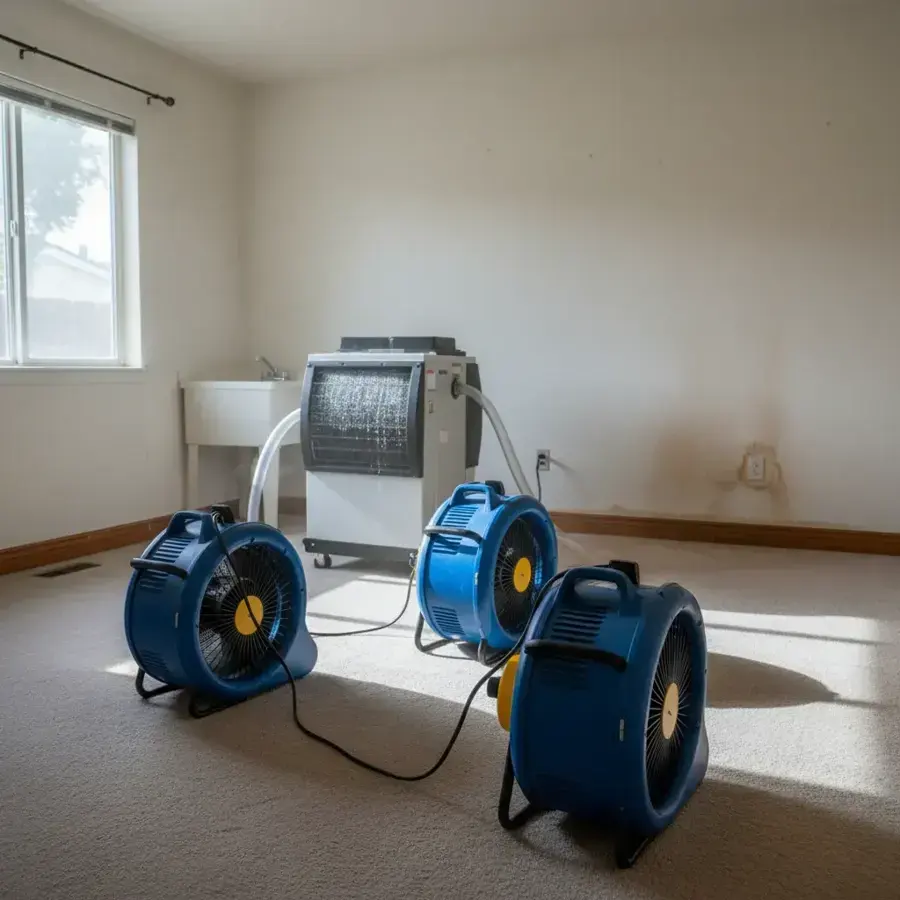
Air movers push dry air across the framing while dehumidifiers pull water out of the room. This burst pipe water damage work runs until readings match a dry reference.
Drying begins promptly because mold can begin to grow in damp materials after 24 to 48 hours.
Repair choices and records
A plumber can explain whether a single spot repair makes sense or whether a longer run of pipe should be replaced, since corrosion that has damaged one section may exist elsewhere in the same pipe.
What the plumber checks
- Which runs are galvanized steel and which are copper.
- The joints where galvanized steel meets copper, because two different metals in contact corrode faster.
- Pressure at the main and at the fixtures.
- Fittings and threaded joints near the leak.
Records for the claim
Coverage depends on the policy and the cause. Photos of the source, the plumber's notes and the daily drying readings give the insurer a complete record, and structural drying logs show when the framing is ready to close up.
A short written note of when the stain or the pressure drop was first noticed also helps.
Questions
How can a homeowner tell whether a house has galvanized pipe?
Galvanized pipe is dull gray steel with threaded fittings, and a magnet sticks to it, while copper pipe is reddish brown and a magnet does not stick. A plumber can confirm what the house has.
Does rust colored water always mean a leak?
No. It does signal corrosion inside the pipe, so it is worth a plumber's look even when no leak is visible.
Can a wet wall be dried without opening it?
Sometimes, when the water was caught quickly and the readings are low. Soaked insulation or drywall that has softened is opened, because it will not dry fully in place.
Does replacing one section of pipe fix the whole problem?
A section repair fixes that section. Older galvanized pipe can corrode along its whole run, so a plumber can advise whether more of it should be replaced.
Where is the main shutoff valve?
It is usually where the water supply enters the house, often near the meter or an outside wall. Finding and testing it before an emergency saves time.
Are copper pipes in these homes a concern too?
Copper supply pipe under 1950s to 1970s slabs can develop pinhole leaks, which is a different kind of hidden leak with different signs.