About 18.3 inches of rain falls on Granada Hills in a year, and most of it comes between January and March in a few big storms. When one of those storms hits hillsides that burned in the 2019 Saddleridge Fire, the water moves faster and brings more debris with it.
Key takeaways
- Granada Hills averages about 18.3 inches of rain a year, mostly January to March in a few big storms, so a single storm can deliver a season's worth of water.
- The Saddleridge Fire burned 8,799 acres across Sylmar, Granada Hills and Porter Ranch hillsides in October 2019, and burned slopes shed more runoff and debris in winter storms.
- Bull Creek is a concrete flood control channel running from Bull Canyon south between Balboa Boulevard and Woodley Avenue, and Bee Canyon creek drains O'Melveny Park.
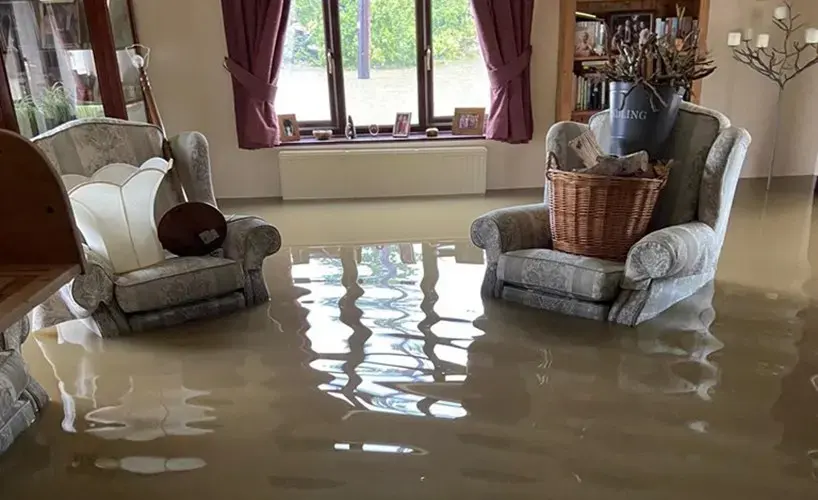
- In a slab home there is no open space under the floor for water to drain into, so storm water that gets in spreads across the floor and into the bottoms of the walls.
- Fall is the time to clear gutters, drains and side yards, because the big storms leave little time to prepare.
Where Granada Hills storm water comes from
Granada Hills reaches into the O'Melveny Park foothills of the Santa Susana Mountains, and rain that falls on that high ground runs toward the neighborhoods below.
Bull Creek
Bull Creek is a concrete flood control channel that runs from Bull Canyon south between Balboa Boulevard and Woodley Avenue. It gives storm water a defined path through the area.
A channel does not stop every drop from leaving its path. Runoff from streets, driveways and slopes can still run toward a property on its own course.
Bee Canyon and O'Melveny Park
Bee Canyon creek runs through O'Melveny Park, which covers 672 acres of the Santa Susana Mountains. That high ground sheds water toward the foothill streets whenever a big storm hits.
How the Saddleridge Fire changed the slopes
The Saddleridge Fire burned 8,799 acres across the Sylmar, Granada Hills and Porter Ranch hillsides in October 2019.
Burned slopes shed more runoff and debris in winter storms. With less vegetation to slow the rain and hold the soil, a short burst of heavy rain can turn into a surge of muddy water.
Debris in that water can plug a gutter or a yard drain, and a plugged drain sends the whole flow somewhere else, often toward a wall or a garage door. Storm runoff and flood cleanup is the work that follows when that happens.
- Rain runs off instead of soaking in.
- Soil, ash and stones travel with the water.
- Drains downhill fill with debris first.
Why a few big storms matter more than steady rain
The yearly total of about 18.3 inches hides a pattern. Most of the water comes from January to March in a handful of large storms, with long dry stretches in between.
That pattern is hard on drainage. Gutters, drains and roofs sit idle for months, collect leaves and dust, and then face a season of rain in a few days.
A storm that lands on dry, dusty ground and clogged drains behaves differently from one that follows weeks of rain, and the first big storm of the season often tests the most.
- Gutters and downspouts packed with leaves.
- Side yards and driveways that slope toward the house.
- Garage doors and entry thresholds at ground level.
- Roof flashing, vents and any spot that is already stained.
What storm water does inside a slab home
Much of Granada Hills was built as post war ranch homes on concrete slabs. A slab leaves no open space under the floor for water to drain into.
Water that crosses a threshold spreads across the floor, soaks carpet and pad, and wicks upward into the bottom of the drywall. Wood and laminate flooring can swell and lift as the water finds the seams.
About 62 percent of Granada Hills homes were built from 1950 to 1969, the years when ranch homes went up after the war, so this pattern covers much of the neighborhood.
- Carpet and pad near the door, then the rest of the room.
- The bottom few inches of drywall and the baseboards.
- Cabinet bases and furniture legs that touch the floor.

Before the first big storm
A few simple jobs in the fall make the difference between a wet driveway and a wet living room.
- Clear leaves and debris from gutters and downspouts, and check that downspouts empty away from the walls.
- Rake yard drains and catch basins clean.
- Look at how water would cross the lot in a hard rain, and keep side yards and driveways open.
- Lift stored boxes off garage floors and onto shelves.
- Move bikes, tools and vehicles out of low spots in the driveway.
- Check the garage door seal and the entry thresholds for gaps.
- Find the main water shutoff and the electrical panel before they are needed.
- Walk through the house with a phone and photograph each room.
When storm water gets inside
Water from a street or a slope is not clean. It can carry mud, fuel, sewage and debris, so it is handled as contaminated.
The first steps
- Keep people and pets out of standing water, especially if outlets or cords are submerged.
- Photograph the high water marks on walls, furniture and cabinets.
- Lift small items and furniture legs out of the water.
- Keep fans and household vacuums away from the wet area.
- Call for water extraction while the mud is still soft.
Cleanup and drying
The sequence is mud and standing water first, then removal of carpet, pad and soaked drywall, then drying. Porous materials that soaked in contaminated water are not kept.
Air movers and dehumidifiers dry the slab, the bottoms of the walls and any framing that got wet, and readings are logged until they match a dry reference. Mold can begin growing in damp materials after 24 to 48 hours, so the work does not wait.
Records for the claim
Coverage depends on the policy and the cause. Dated photos, a list of damaged items and the drying logs make up the claim file.
Structural drying readings also show when the walls can be closed up, and owners can start from Granada Hills water damage restoration when a storm reaches the house.
Questions
When does most rain fall in Granada Hills?
About 18.3 inches falls in a year, mostly from January to March in a few big storms.
What did the Saddleridge Fire change for runoff?
The fire burned 8,799 acres across the Sylmar, Granada Hills and Porter Ranch hillsides in October 2019, and burned slopes shed more runoff and debris in winter storms.
Does a concrete channel like Bull Creek keep homes dry?
A flood control channel gives storm water a path through the area, but it cannot control every route water takes. Runoff from streets, yards and slopes can still reach a property.
Why is a slab home different when storm water gets in?
There is no open space beneath the floor, so water spreads across the surface and wicks into the walls. Flooring and the bottoms of walls take the damage first.
Is storm water from a street contaminated?
Yes. It can carry mud, fuel, sewage and debris, so porous materials that soak in it are removed.
How big is O'Melveny Park?
The park covers 672 acres of the Santa Susana Mountains, and Bee Canyon creek runs through it.