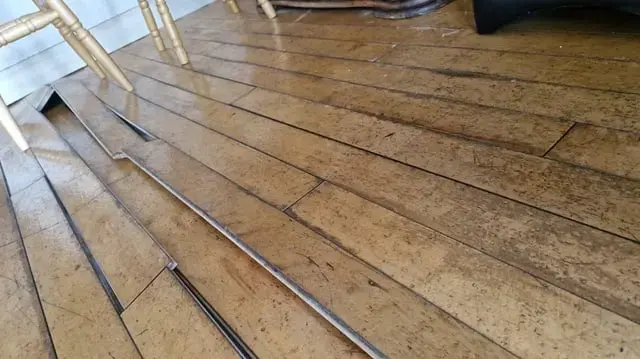
A radiant heat leak in a Balboa Highlands Eichler is a plumbing failure hidden inside a concrete slab, so the first clue is rarely a puddle. More often it is a warm patch underfoot, a heating system that keeps topping itself off, or a water bill that climbs for no clear reason.
Key takeaways
- A warm or damp patch on the floor, a heating system that keeps losing pressure and a rising water bill all point toward a leak in the slab.
- Balboa Highlands holds just over 100 Eichler homes built from 1962 to 1964, and their hydronic radiant heat pipe is cast into the concrete slab.
- Turning off the heating system and its water feed, and closing the main shutoff if water is visible, limits new water until a leak detection plumber finds the pipe.
- Concrete holds water, so the slab, the flooring above it and the base of the walls are dried with dehumidifiers and air movers until readings match a dry reference.
- Balboa Highlands is an HPOZ, so owners can ask LA City Planning about visible repairs before the work is planned.
How a radiant heat leak shows itself
Hydronic radiant heat warms a house by moving hot water through pipe set in the floor. In a slab home that pipe sits inside the concrete, so a leak sends water into the slab and the ground beneath it long before anything shows on top.
That is why slab leak water damage is usually found late.
The signs are indirect, and they tend to come in groups.
- A warm or hot patch on the floor that stays warm even with the heat turned down.
- Damp carpet edges, lifted baseboards, or flooring that starts to cup, crack or lift.
- A musty smell in one room or along one wall.
- A heating system that loses pressure or keeps refilling itself.
- A water meter that moves while every tap and appliance is off.
What makes Balboa Highlands different
Most of Granada Hills grew as post war ranch homes on concrete slabs, and about 62 percent of its homes were built from 1950 to 1969. Balboa Highlands sits inside that pattern but has a story of its own.
The Eichler slab
The neighborhood holds just over 100 Eichler homes built from 1962 to 1964. Their hydronic radiant heat pipe is cast into the slab, so the heating pipe and the floor share the same piece of concrete.
A leak in one of these homes can come from the heating pipe or from a supply pipe, and finding out which takes leak detection tools rather than guesswork.
The historic district
Balboa Highlands is an HPOZ, the first post war historic district in the Valley. That status does not change how fast water must be dried, but it is a reason to ask questions before a repair is planned.
Owners can ask LA City Planning whether a planned repair touches anything the historic designation covers. A repair that stays under the flooring and one that changes how the house looks from the street are different questions.
First steps when a slab leak is suspected
A few steps limit the damage while the source is still unknown. Cutting into the floor to hunt for the pipe adds damage, so leak detection comes before any concrete or flooring is opened.
- Turn off the heating system and close its water feed if that can be done safely.
- Read the water meter, shut off every tap and appliance, then read it again to see whether it moved.
- Close the main shutoff valve if water is visible or the meter keeps moving.
- Photograph wet spots, stains and both meter readings before anything is moved.
- Lift rugs and move furniture off damp flooring, and keep air moving in the room.
- Call a plumber with leak detection equipment, and call for water extraction if water is standing on the floor.
How the slab and the floor are dried
Water from a slab leak does not stay put. It spreads through the concrete, wicks into the bottom of the walls and rises into the flooring above.
Drying starts quickly because damp materials can begin growing mold after 24 to 48 hours.
Mapping the water
Moisture meters and thermal imaging trace where the water traveled, and the readings are logged room by room. That map decides what comes up and what can dry where it lies.
Standing water is extracted first, so the slab is not sitting under a film of water while the equipment runs.
Drying concrete
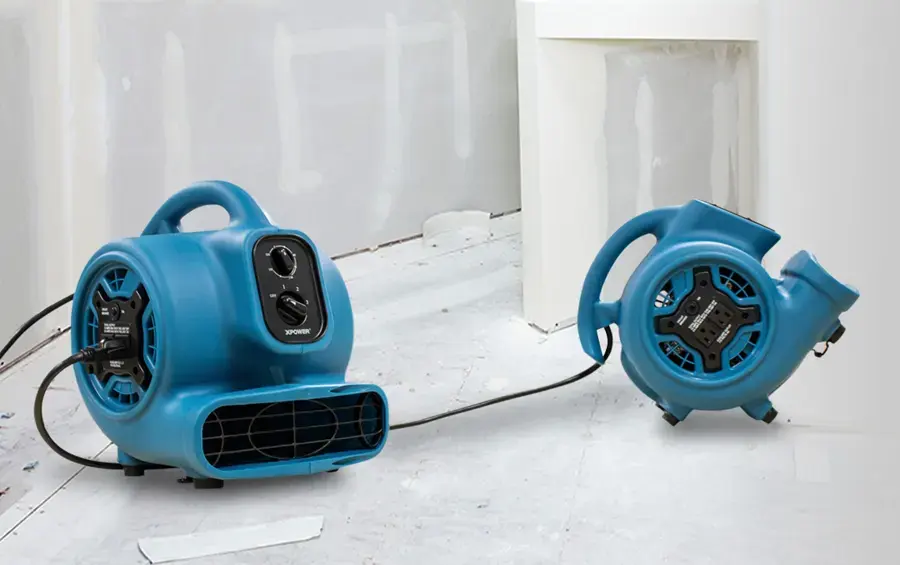
Concrete is dense and releases moisture slowly. The plan leans on dehumidifiers that pull water out of the air while air movers keep the surface moving, which is the core of structural drying.
- Flooring over the wet area is lifted, and baseboards come off so wall bottoms can dry.
- Dehumidifiers and air movers run with the room closed up, and readings are logged every day.
- Stubborn concrete may call for desiccant dehumidifiers or floor drying mats, which pull water out of the slab itself.
- Drying ends when the slab, flooring and wall bases read like a dry reference, not after a set number of days.
Who does what once the leak is found
The plumber owns the pipe repair and the restoration team owns the drying. The jobs overlap, because new flooring should not go over concrete that is still wet.
- Plumber: locates the leak and repairs or reroutes the pipe.
- Restoration team: extracts water, lifts wet flooring and dries the slab and the walls.
- Flooring contractor: installs new flooring only after the slab reads dry.
- Owner: chooses the repair path, and checks with LA City Planning where the look of the house is involved.
Records and coverage
Coverage for a slab leak depends on the policy and the cause, and some policies treat the pipe repair and the water damage differently. Photos, meter readings and daily drying logs all help when the claim is filed.
The restoration team documents each step so the file is ready when the insurer asks. Owners can start with Granada Hills water damage restoration when a leak is suspected.
Questions
How can an owner tell a radiant heat leak from a supply pipe leak?
Warm patches and pressure loss in the heating system lean toward the heating pipe, while damp spots near a bathroom or kitchen lean toward a supply pipe, but the signs overlap. A leak detection plumber confirms which pipe is leaking.
Does the whole floor have to come up?
Not always. Flooring over the wet area is lifted, and the readings show how far the water traveled. Rooms that stay dry can keep their flooring.
How long does a slab take to dry?
It depends on how much water got in and how thick the concrete is, so readings decide, not the calendar. Covering a slab too soon traps moisture under the new flooring.
How many Eichler homes does Balboa Highlands have?
Just over 100, built from 1962 to 1964, in a neighborhood that is an HPOZ and the first post war historic district in the Valley.
Why is the heating system turned off during a leak?
A system that keeps adding water to cover a leak feeds the leak and runs up the water bill. A plumber or heating technician decides when it is safe to turn the system back on.
What happens to the radiant heating system after the leak is found?
That is a plumbing and heating decision. The pipe can be repaired, the loop rerouted or the heating handled another way, and the owner and the plumber choose. The restoration team's readings show when the slab is dry enough for the next step.